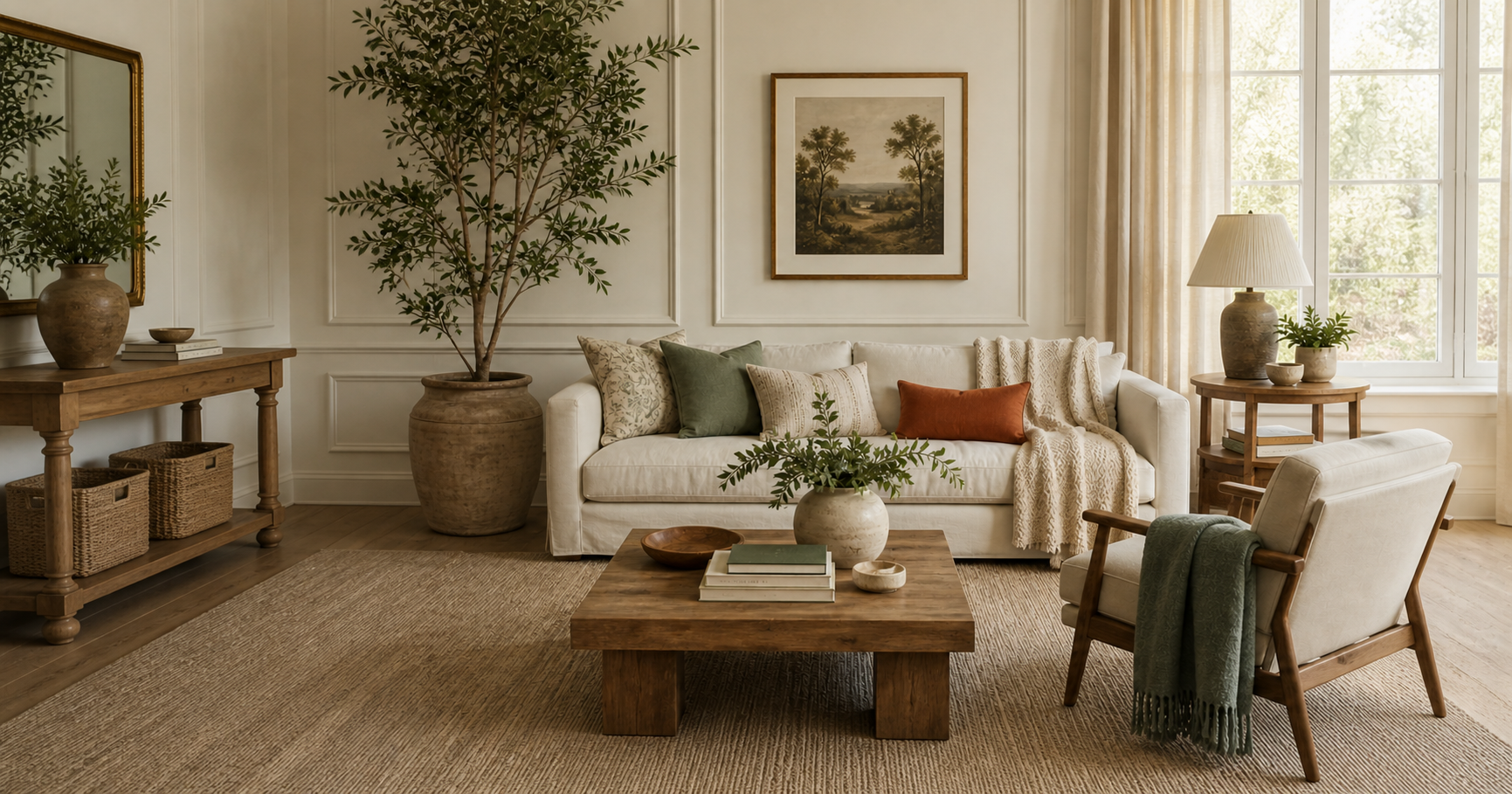
Have you ever walked into a room in your home and thought: something just feels off?
You may like most of what you’ve purchased. The paint is fine. There are pictures on the walls. You’ve added pillows, lamps, baskets, and décor. But somehow, the room still doesn’t feel finished.
1. Your rug is too small
Think of your rug as an anchor. In a living room, it should connect the sofa, chairs, coffee table, and surrounding furniture into one defined conversation area. When a tiny rug floats in the center, the furniture starts to feel like separate islands. Before replacing furniture, reconsider the rug’s size and placement.
2. Your curtains are hanging too low
Curtains have a bigger effect than most people realize. A rod installed directly above the window can visually shrink the opening and lower the ceiling. Hang the rod higher and extend it beyond the window sides. Framing the window this way makes it feel larger, taller, and more polished.
3. Your lighting is too harsh
One bright overhead light can make a beautiful room feel flat. Create layers with a ceiling fixture, floor lamp, table lamp, accent lighting, and warm or dimmable bulbs. Different light sources at different heights create depth—and make the room feel good at 7:30 at night when you’re actually using it.
4. There’s no clear focal point
When you enter the room, where should your eyes go? A fireplace, artwork, television wall, large window, light fixture, or bed can lead the visual hierarchy. Choose what matters most, then let the other elements support it instead of competing.
5. The furniture placement feels awkward
Think about zones and relationships. Can someone comfortably talk from the chair to the sofa? Is there a place to set down a drink? Can people walk through without weaving around furniture? A successful layout supports the way your family actually lives.
6. The scale is wrong
A large sectional with a tiny coffee table will feel strange, even if you like both pieces. Good design is about relationships. Evaluate how large or small each item feels compared with everything around it.
7. There are too many competing colors
Your room doesn’t need to match, but it does need a color story. Identify the main colors, supporting tones, and one smaller accent. Repeating them throughout the room makes separate objects feel connected rather than random.
8. Your room is missing texture and layers
The finishing feeling often comes from combining materials: wood, fabric, metal, greenery, curtains, rugs, baskets, pillows, artwork, and lighting. You don’t need all of them, but varied texture helps a room feel collected instead of simply furnished.
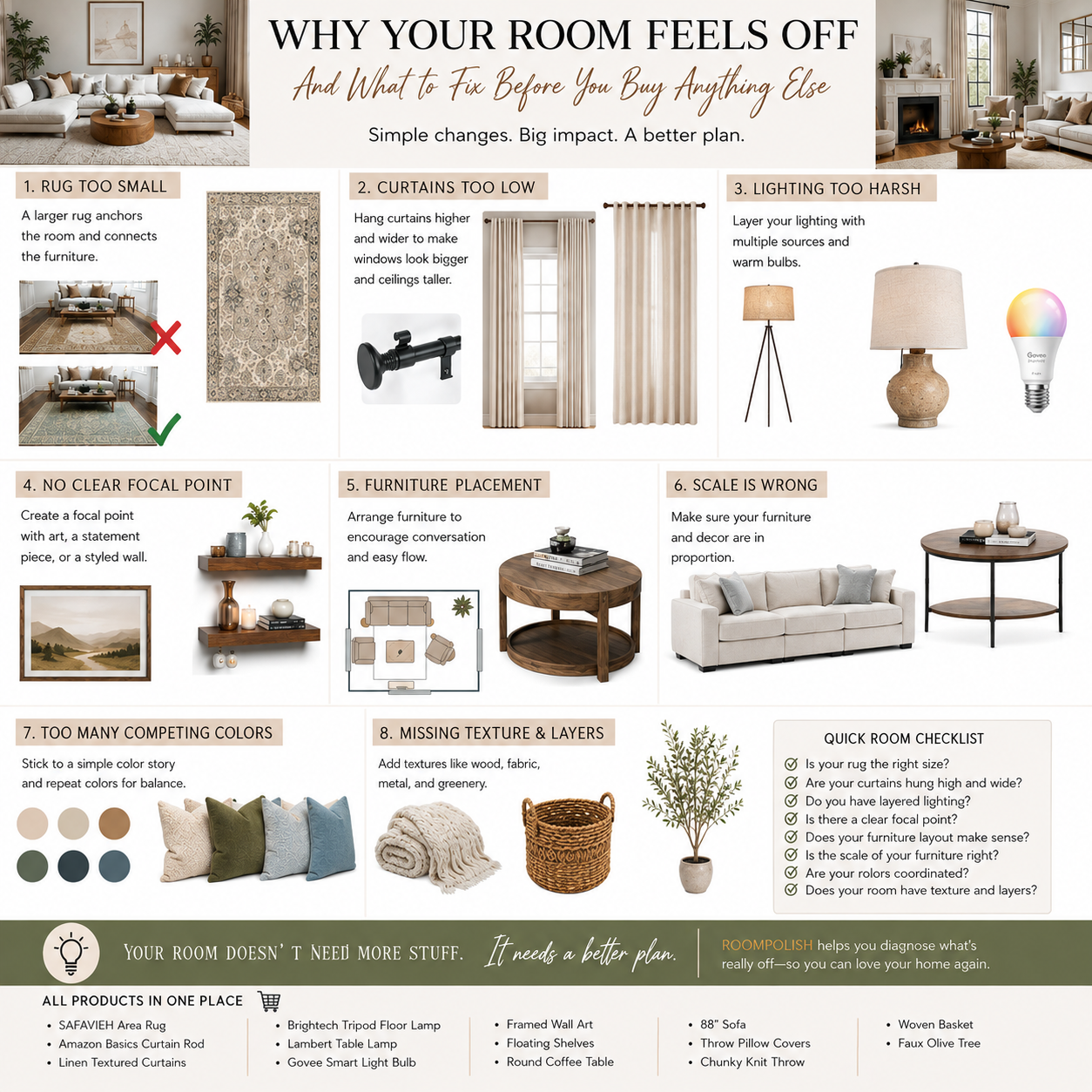
A simple, shoppable room edit
These are easy starting points for adding scale, warmth, light, and texture. Product links open at the retailer in a new tab.
Before you buy anything else, diagnose the room
Don’t immediately ask, “What should I buy?” Ask what exactly feels wrong. Is the room too dark? Is the rug undersized? Does one wall feel empty? Is there too much clutter—or nowhere for your eye to rest?
Once you identify the problem, the solution becomes easier. You may need to move a chair, raise a curtain rod, remove three accessories, rearrange artwork, change a bulb, or simply stop adding things.