Color + materials · 6 minute read
How to Mix Wood Tones
A straightforward way to combine different woods so the room feels layered instead of mismatched.
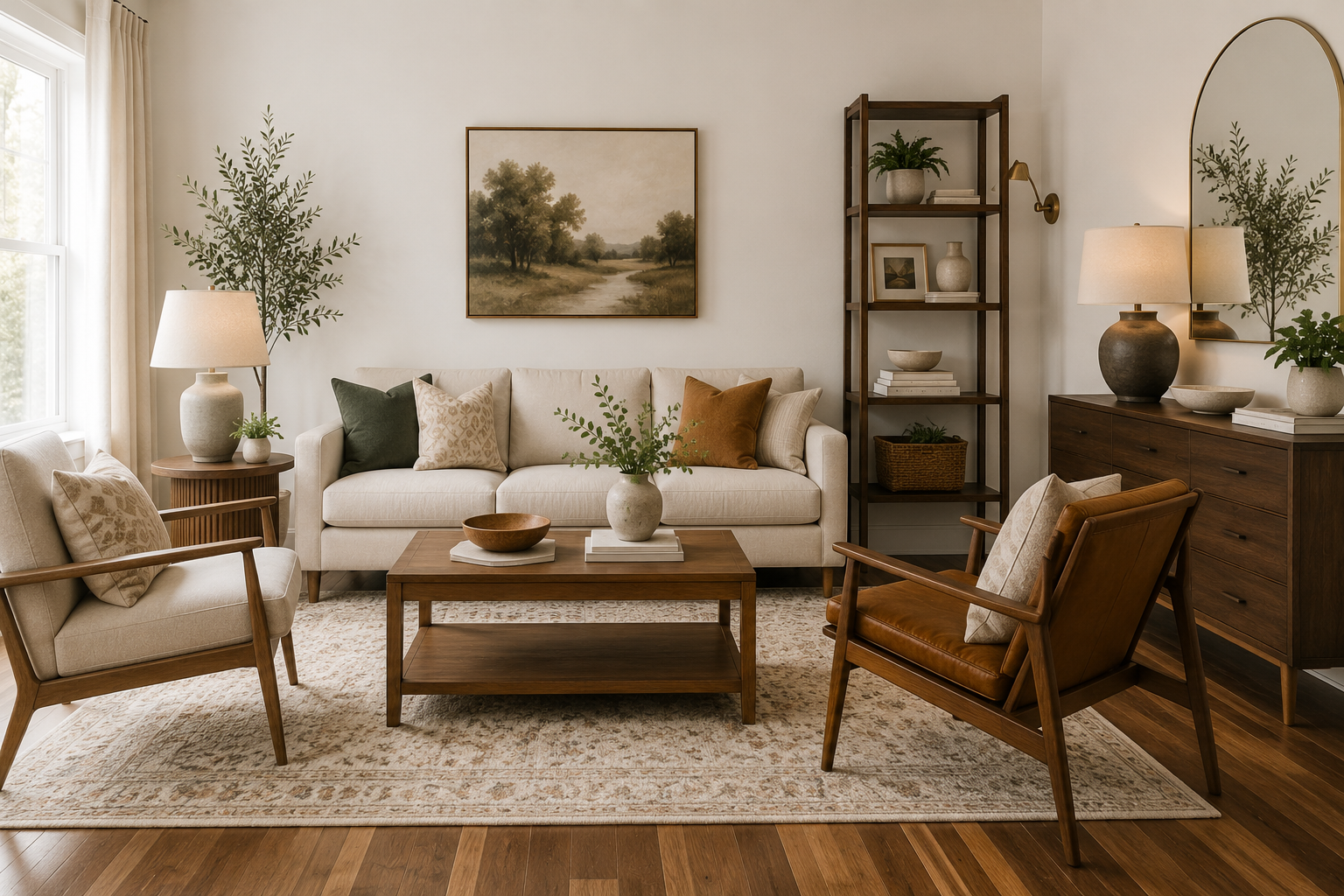
Wood tones do not need to match perfectly. In fact, a room with one identical wood finish everywhere can feel flat or overly coordinated.
The key is to make the variation look intentional by controlling undertones, contrast, repetition, and where each tone appears.
Identify the dominant wood
Start with the largest wood surface you are not changing: the floor, kitchen cabinetry, dining table, or a major built-in. Treat that as the room’s lead tone.
New pieces do not need to copy it, but they should relate to it or create an intentional contrast.
Look at undertones
Woods can lean warm and golden, red, neutral brown, gray, or nearly black. Mixing woods with compatible undertones is the easiest route to a calm result.
If you combine very different undertones, repeat each one elsewhere so neither looks accidental.
Use contrast on purpose
Two medium-brown woods that are almost—but not quite—the same can look like a failed match. A clearer light-and-dark contrast often feels more confident.
Contrast also helps separate a table from a wood floor or a dresser from a similarly toned wall.
Repeat each tone
A wood tone usually feels established once it appears at least twice. Repeat it through a frame, lamp base, stool, tray, or small accent rather than adding another large furniture piece.
Repetition moves the eye around the room and connects the materials.
Create a buffer
Rugs, upholstery, painted surfaces, metal, and stone create useful pauses between wood pieces. A rug beneath a wood table prevents it from visually blending into a wood floor.
These buffers also give the room more texture and prevent it from feeling heavy.
Limit the main conversation
Most rooms can comfortably support two or three prominent wood tones. More can work, but it requires a strong palette and repetition.
If the room feels busy, remove the smallest one-off wood accents before replacing a major piece.
Choose one dominant wood, add one contrasting partner, and repeat both across the room with fabric or painted surfaces between them.
Need help pulling your room together?
Make your space feel intentional, functional, and finished.
RoomPolish offers convenient online interior design help with clear direction you can use from home.
Explore Our Design Packages