Small spaces · 6 minute read
7 Ways to Make a Small Bedroom Feel Bigger
Seven practical ways to create more breathing room without changing the size of your bedroom.
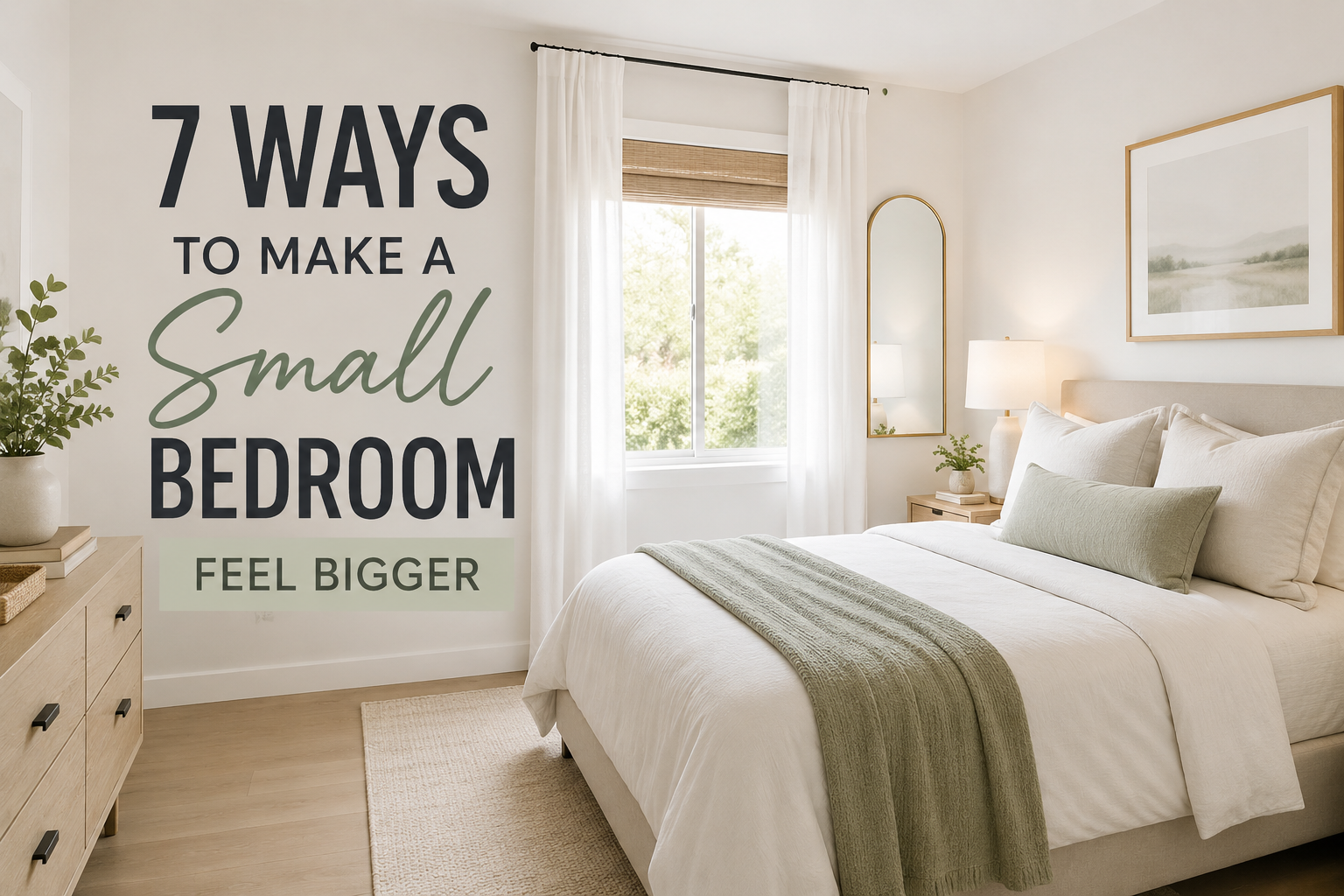
A small bedroom does not need to feel cramped. The goal is not to make every piece tiny or turn the room completely white. It is to create clearer sight lines, better scale, and fewer visual interruptions.
Start with the changes that affect how you move through the room. Then add the layers that make the space feel calm, intentional, and complete.
1. Give the bed one clear wall
Place the bed where it can act as the room’s visual anchor without blocking the natural path from the door. A centered bed often feels calmer than one pushed into a corner, even when the room is compact.
If centering is impossible, make the off-center placement look deliberate with a wall-mounted sconce, narrow shelf, or artwork that balances the open side.
2. Keep more of the floor visible
Visible floor creates breathing room. Choose nightstands with legs, a wall-mounted shelf, or storage that sits neatly under the bed instead of adding another bulky cabinet.
This is less about minimalism and more about reducing the number of heavy shapes that stop the eye.
3. Use the full height of the room
Hang curtains closer to the ceiling and let them reach the floor. The long vertical line makes the window—and the room—feel taller.
The same idea works with a tall headboard, vertical artwork, or one narrow bookcase rather than several short storage pieces.
4. Choose fewer, better-scaled pieces
A common mistake is filling a small room with many undersized items. One appropriately sized dresser usually feels more polished than several little storage units.
Measure the pathways first, then choose the largest pieces that fit comfortably within them.
5. Keep the palette connected
You do not have to avoid color. Repeat two or three related tones across bedding, walls, curtains, and accessories so the eye moves smoothly instead of stopping at every contrast.
Soft contrast feels expansive; scattered high contrast can make a small room feel chopped up.
6. Layer the lighting
Use more than one source of light: a ceiling fixture for general light, bedside lighting for tasks, and a small ambient source for warmth.
Light in different parts of the room reduces dark corners and gives the space more depth after sunset.
7. Edit the surfaces
Leave some negative space on the dresser and nightstands. A few larger objects—a lamp, tray, framed piece, or plant—usually look calmer than a collection of small items.
The room should still feel personal. The edit simply gives your favorite pieces room to register.
Begin with the floor plan, curtains, and lighting. Those three changes usually create the biggest visual return before you buy anything decorative.
Need help pulling your room together?
Make your space feel intentional, functional, and finished.
RoomPolish offers convenient online interior design help with clear direction you can use from home.
Explore Our Design Packages